Maintaining Privacy in Glass Houses
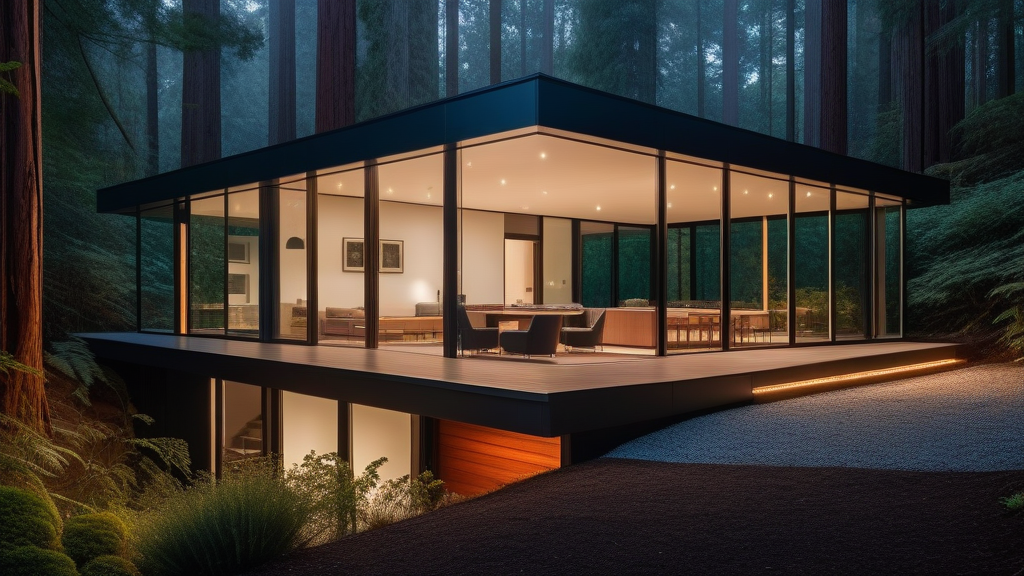
The glass house represents modern architectural minimalism. The structure offers panoramic views and blurs indoor and outdoor boundaries. The transparent pavilion design requires architectural solutions to protect the human need for privacy and refuge.
How To Maintain Privacy In A Glass House With Site Placement
Strategic site placement serves as the primary privacy defense for a glass house. Architects analyze property sightlines to position the glass structure within dense urban lots or secluded forest environments. Natural topography provides a physical barrier against neighboring properties and public roads. The site design process orchestrates views so the occupants look out onto controlled vistas rather than public spaces.
Landscaping professionals integrate 30-foot mature trees and dense bamboo screens to create the first layer of privacy. The landscape architecture blocks street-level visibility for homes built on 0.5-acre lots.
What Are Architectural Layers And Screens For Glass Homes
Architects employ secondary architectural elements to create layers of privacy when natural topography provides insufficient coverage. Slatted wooden screens, movable louvers, and perforated metal panels function as dynamic visual barriers. Homeowners manually or electronically adjust the architectural screens depending on the time of day and the desired level of interior exposure.
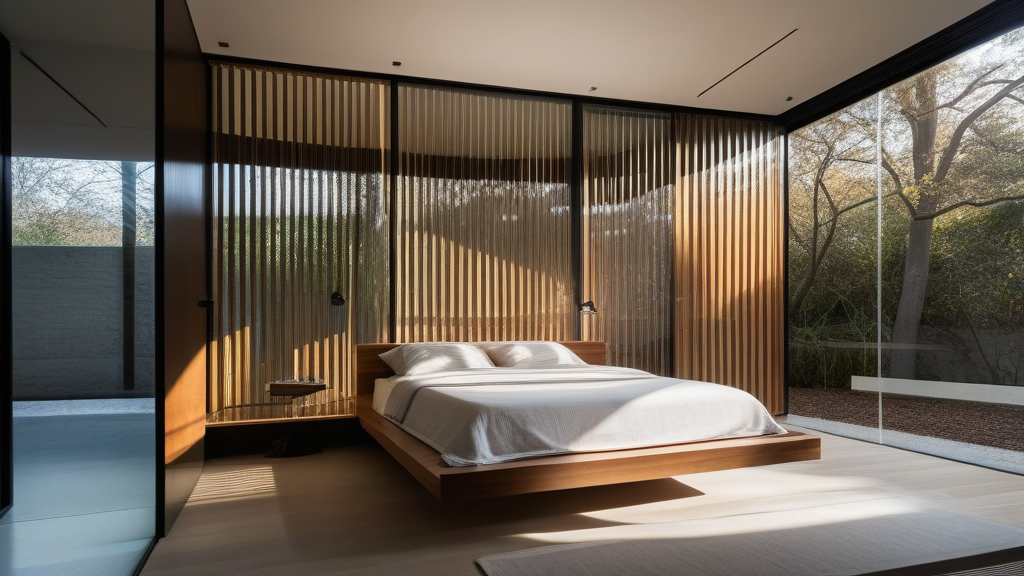
The screens cast shifting shadows across the interior living spaces during daylight hours. Homeowners draw the perforated metal panels closed at night to obscure the illuminated glass box from outside observers. Interior courtyard designs turn the glass walls inward to face a private, enclosed garden space while presenting solid, opaque walls to the exterior streetscape.
Privacy Screen Material Specifications
| Material Type | Average Cost Per Square Foot | Light Transmission | Durability Lifespan |
|---|---|---|---|
| Slatted Cedar Wood | $45 | 40% | 15 years |
| Perforated Aluminum | $85 | 25% | 40 years |
| Automated Steel Louvers | $120 | 0% to 100% | 30 years |
How Does Smart Glass Work For Home Privacy
Electrochromic smart glass provides the seamless privacy solution for transparent homes. High-tech glazing transitions from completely transparent to frosted and opaque via a wall switch or an automated command from a smart home system. Smart glass technology eliminates the need for fabric curtains or window blinds in modern glass structures.
The technology relies on polymer-dispersed liquid crystals (PDLC) sandwiched between two 0.25-inch glass panes. The liquid crystals align when the system applies a 60-volt electrical current, allowing 98% of visible light to pass through. The liquid crystals scatter when the power is cut, creating an opaque frosted effect that lets in diffuse light while completely obscuring the interior view.
- Standard PDLC smart glass panels measure up to 72 inches by 144 inches.
- The smart glass switching speed takes less than 0.1 seconds.
- Electrochromic glass consumes 0.5 watts per square foot when energized in the clear state.
Homeowners install smart glass in bathrooms and bedrooms featuring floor-to-ceiling windows to instantly convert the rooms into private sanctuaries. Builders source materials from Smart Glass Manufacturers to customize panel dimensions for residential projects.